

Daily Bone Immunity Idea | Piezoelectric Immunotherapy for Osteomyelitis
(1) Abstract: Chronic osteomyelitis is difficult to cure and is associated with persistent bacterial colonization and disruption of the osteoimmune temporal sequence, in which antibacterial immunity, inflammatory resolution, and bone regeneration cannot proceed in an orderly manner. This study proposes a drug-free staged triboelectric immunotherapy that uses a direct-current triboelectric nanogenerator to restore this sequence. Optimized electrical stimulation is cytocompatible, promotes osteogenesis, and inhibits Staphylococcus aureus and biofilms. Sequencing shows osteoimmune dysregulation and attenuated JAK2-STAT3 signaling in the bone marrow of chronic osteomyelitis; electrical stimulation reactivates JAK2-STAT3 in macrophages, promotes an antibacterial inflammatory phenotype and antibacterial cytokines, and STAT3 inhibition partially reverses these effects. In vivo, short-term stimulation induces STAT3-dependent antibacterial immune activation and reduces bacterial burden, while long-term stimulation shows inflammatory resolution, collagen remodeling, and enhanced bone regeneration, supporting a time-dependent osteoimmune response pattern.
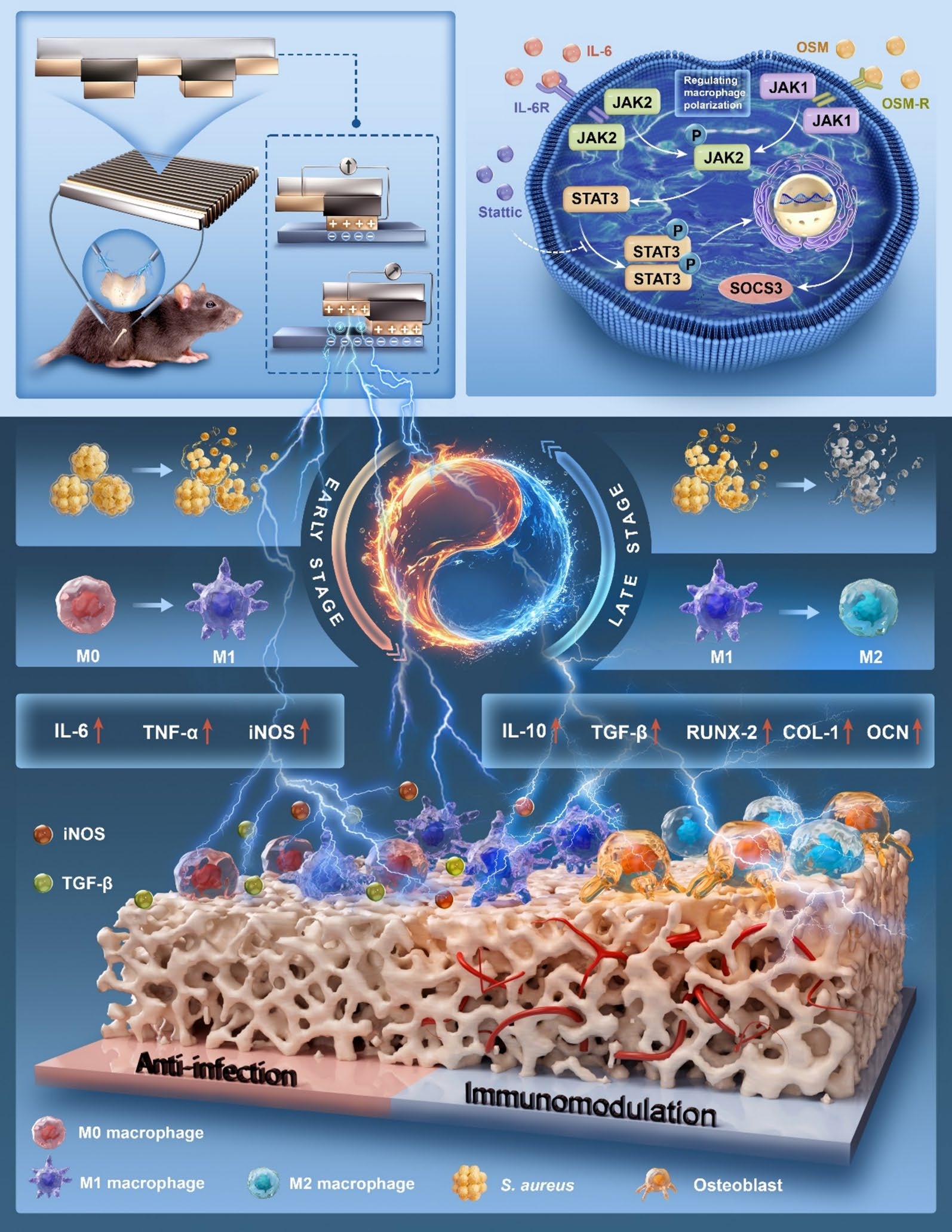
(2) Research background: Chronic osteomyelitis requires eradication of pathogens and restoration of an osteogenic microenvironment, but these goals are often decoupled. Repeated debridement and prolonged antibiotics cannot reliably prevent recurrence, and Staphylococcus aureus biofilms, intracellular infection, and invasion of the osteocyte network exacerbate persistence. Persistent infection disrupts the osteoimmune sequence of early antibacterial inflammation, inflammatory resolution, vascularization, and osteogenesis. JAK2-STAT3 connects infection, macrophage dysfunction, and bone repair and has context-dependent bidirectional effects. Existing immunotherapies mostly rely on drug delivery, but impaired blood supply in infected bone limits penetration. Electrical stimulation can regulate immunity and regeneration, while conventional devices rely on external power sources; a direct-current triboelectric nanogenerator can convert low-frequency mechanical motion into directional pulsed direct current, providing an engineering basis for localized, on-demand, repeatable, drug-free electrical stimulation.
(3) Main content: The study proposes a direct-current triboelectric nanogenerator-driven staged triboelectric therapy. Using fixed optimized stimulation conditions, it examines whether short-term and long-term responses differ temporally. The authors do not regard it merely as an antibacterial or osteogenic stimulator, but as a drug-free triboelectric platform that combines immediate local antibacterial intervention with temporally coordinated osteoimmune regulation and bone repair. The work systematically evaluates in vitro and in vivo performance and explores mechanisms regulating the infected bone marrow microenvironment, focusing on whether JAK2-STAT3 participates in the transition from early antibacterial immune activation to later tissue repair.
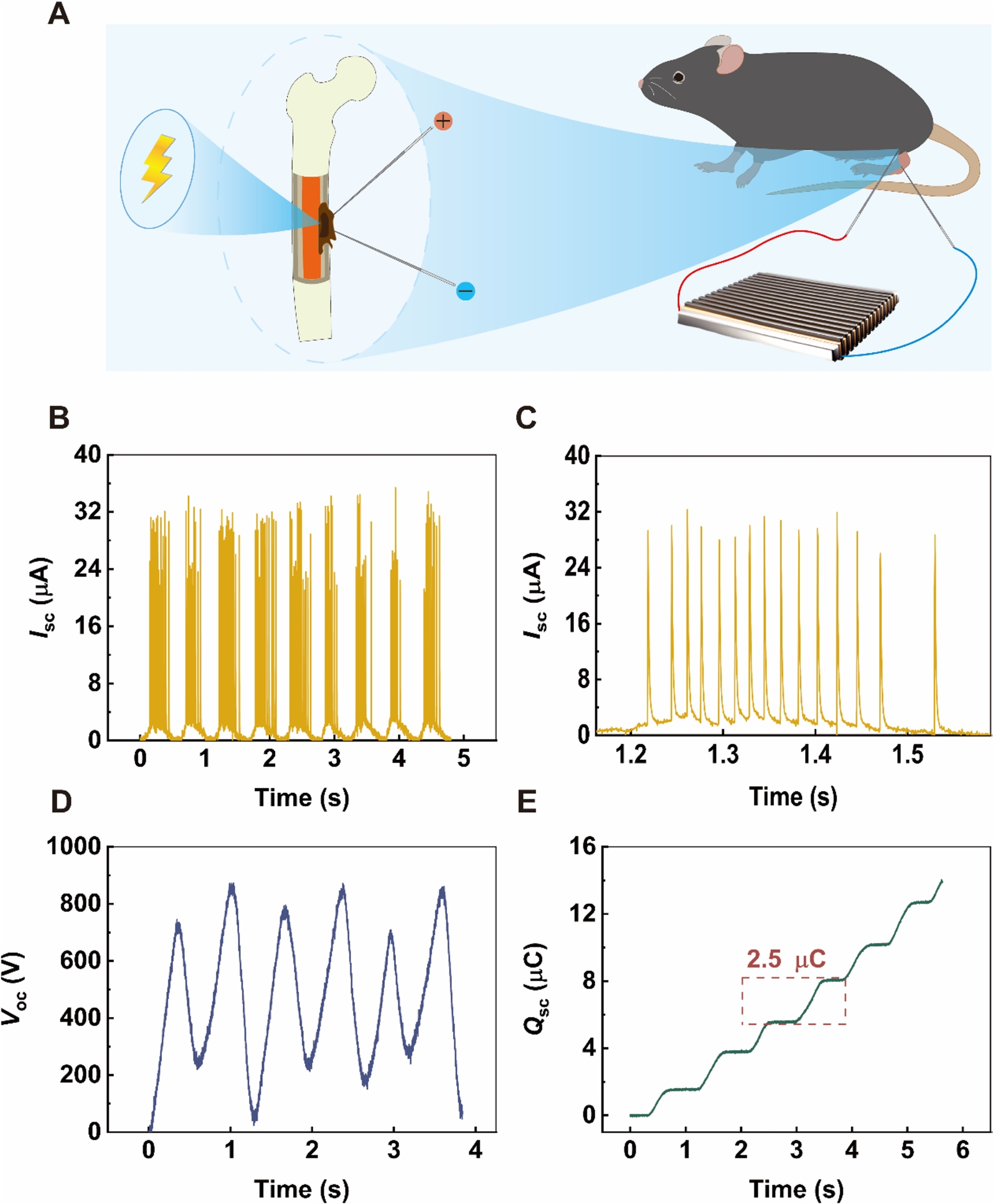
(4) Research design: A sliding-mode direct-current triboelectric nanogenerator was constructed to generate pulsed direct current through electrostatic breakdown. In vitro, different currents and durations were compared to evaluate macrophage compatibility, pre-osteoblast osteogenesis, and planktonic and biofilm forms of Staphylococcus aureus. Mechanistically, RNA sequencing, KEGG/GSEA, and WB were performed on tibial bone marrow from chronic osteomyelitis and controls; in macrophages, IF, WB, ELISA, and qPCR were combined with Stattic inhibition and STAT3 siRNA knockdown. In animals, a mouse tibial osteomyelitis model was used, with groups including control, Stattic, electrical stimulation, and electrical stimulation plus Stattic. Short-term and long-term endpoints were set, and assessments included complete blood count, immunofluorescence, bacterial plating, flow cytometry, histology, ELISA, micro-CT, and major organs.
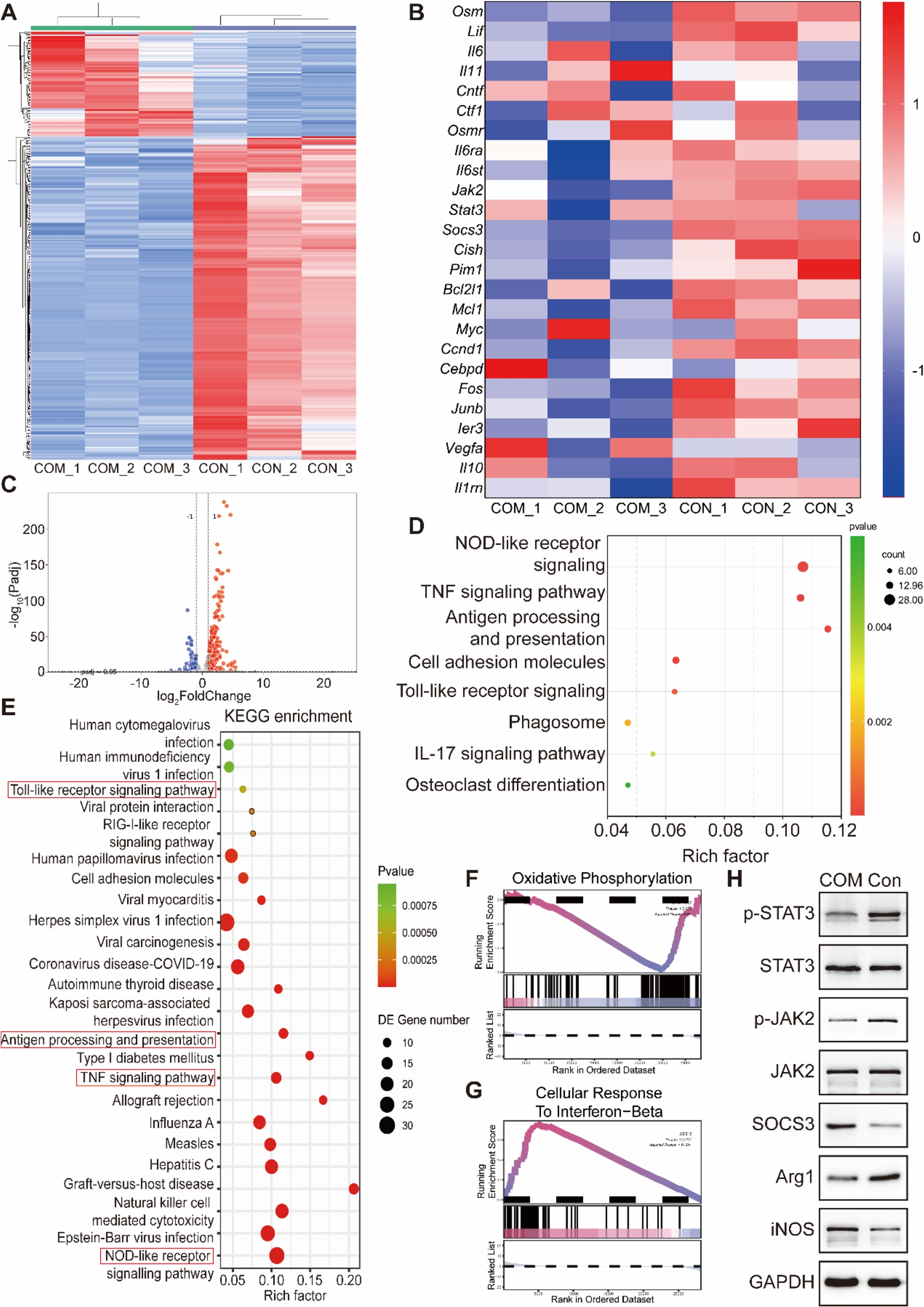
(5) Results: The direct-current triboelectric nanogenerator output stable pulsed direct current. Optimized conditions were cytocompatible and promoted osteogenesis, and inhibited Staphylococcus aureus growth and biofilms in a parameter-dependent manner. Bone marrow sequencing in chronic osteomyelitis showed osteoimmune dysregulation, attenuated JAK2-STAT3, and elevated SOCS3. Electrical stimulation activated macrophage JAK2-STAT3, reduced SOCS3, and promoted an inflammatory/antibacterial phenotype, ROS, and antibacterial genes; Stattic and STAT3 knockdown weakened these effects. Short-term in vivo stimulation induced STAT3-dependent antibacterial immune activation, enhanced T-cell responses, reduced bacterial burden, and did not cause persistent inflammation. Long-term stimulation showed attenuated inflammatory and chemokine signaling, decreased JAK2-STAT3 activity, inflammatory resolution, collagen remodeling, and improvements in osteogenic markers and bone structure, with no obvious abnormalities in major organs.
(6) Perspective: This study suggests that the bone marrow in chronic osteomyelitis is not simply hyperinflammatory, but is closer to a state of inefficient antibacterial immunity or immunosuppression. Temporal activation of JAK2-STAT3 may first restore antibacterial capacity and then, as bacterial burden decreases, shift toward inflammatory resolution and bone repair. Fixed electrical stimulation conditions can induce temporally distinct osteoimmune responses, providing an idea for drug-free regulation. Future work could expand sample sizes, extend follow-up, and add time points; use sorted-cell or single-cell sequencing to improve cell-type resolution; characterize local electric field and current distribution; and validate robustness in large-animal models while optimizing device engineering and stimulation parameters.
We provide full-process services for various material designs (including highly innovative scheme design, preparation, characterization, in vitro and in vivo validation (cell/animal experiments), etc.): a postdoctoral team (with multiple high-impact publications in Zone 1 journals) can meet all kinds of tricky and challenging requirements, including hydrogels / drug delivery / nanomaterials / polymers / liposomes / microneedle drug delivery, etc. We can assist with project design / NSFC grant applications / publication of high-impact Zone 1 and Zone 2 papers in journals such as AFM, SCI, AM, etc. Welcome to consult 👇️
17768014569 (Senior Engineer Gao)
17761925168 (Engineer Zhang)
18013729810 (Engineer Yang)
18915694570
Previous: Daily Research Idea: T
Next: Daily Cardiovascular I


