

GLUT1 Hijacking Self-Amplifying Nanoreactor for Tumor Metabolic Intervention
Research and applications of tumor metabolic reprogramming and angiogenesis represent an interdisciplinary cutting-edge field. Its primary goal is to use nanomaterials as drug carriers to achieve targeted drug delivery and metabolic intervention by regulating their interactions with tumor cells, vascular endothelial cells and the microenvironment.
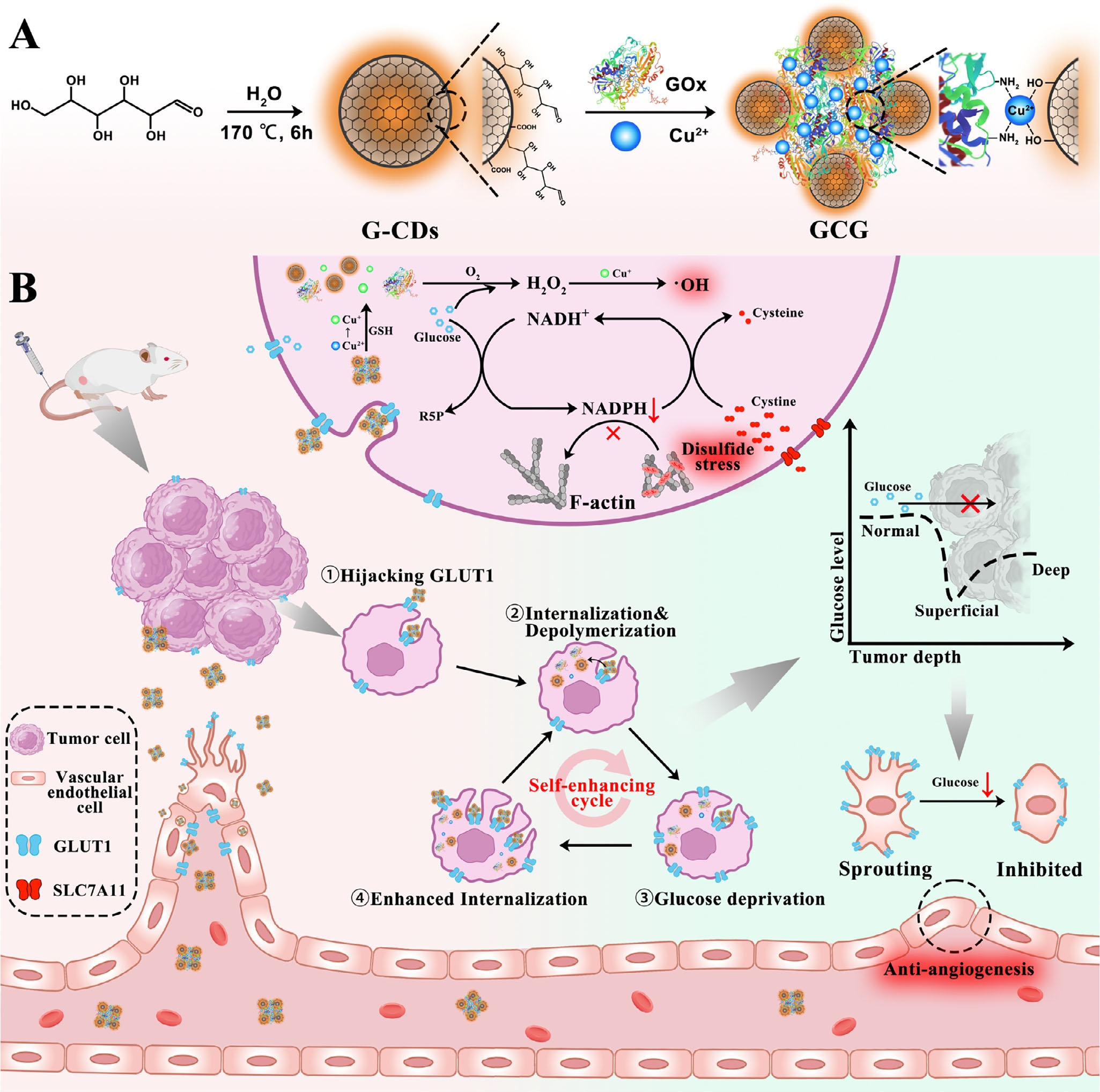
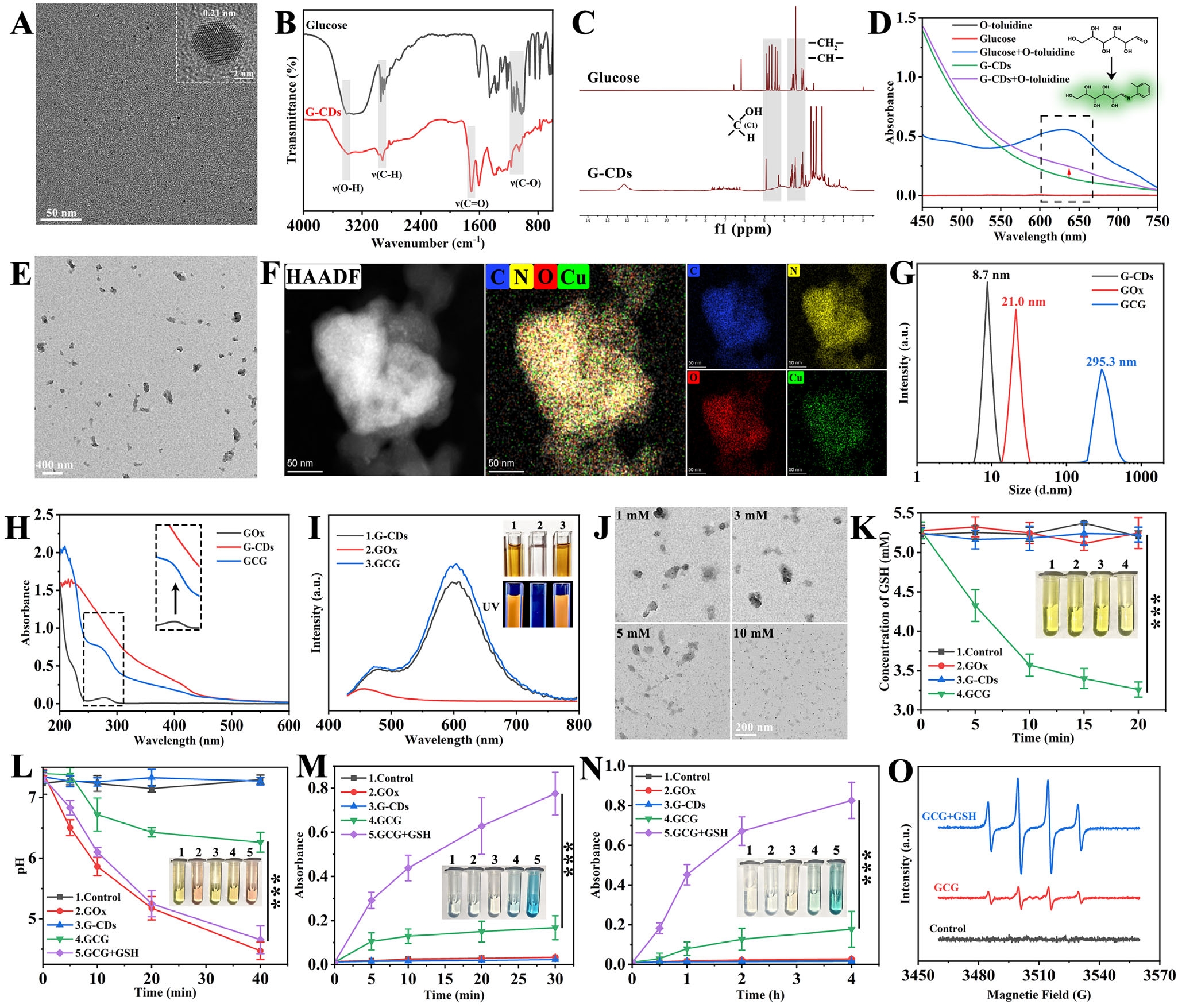
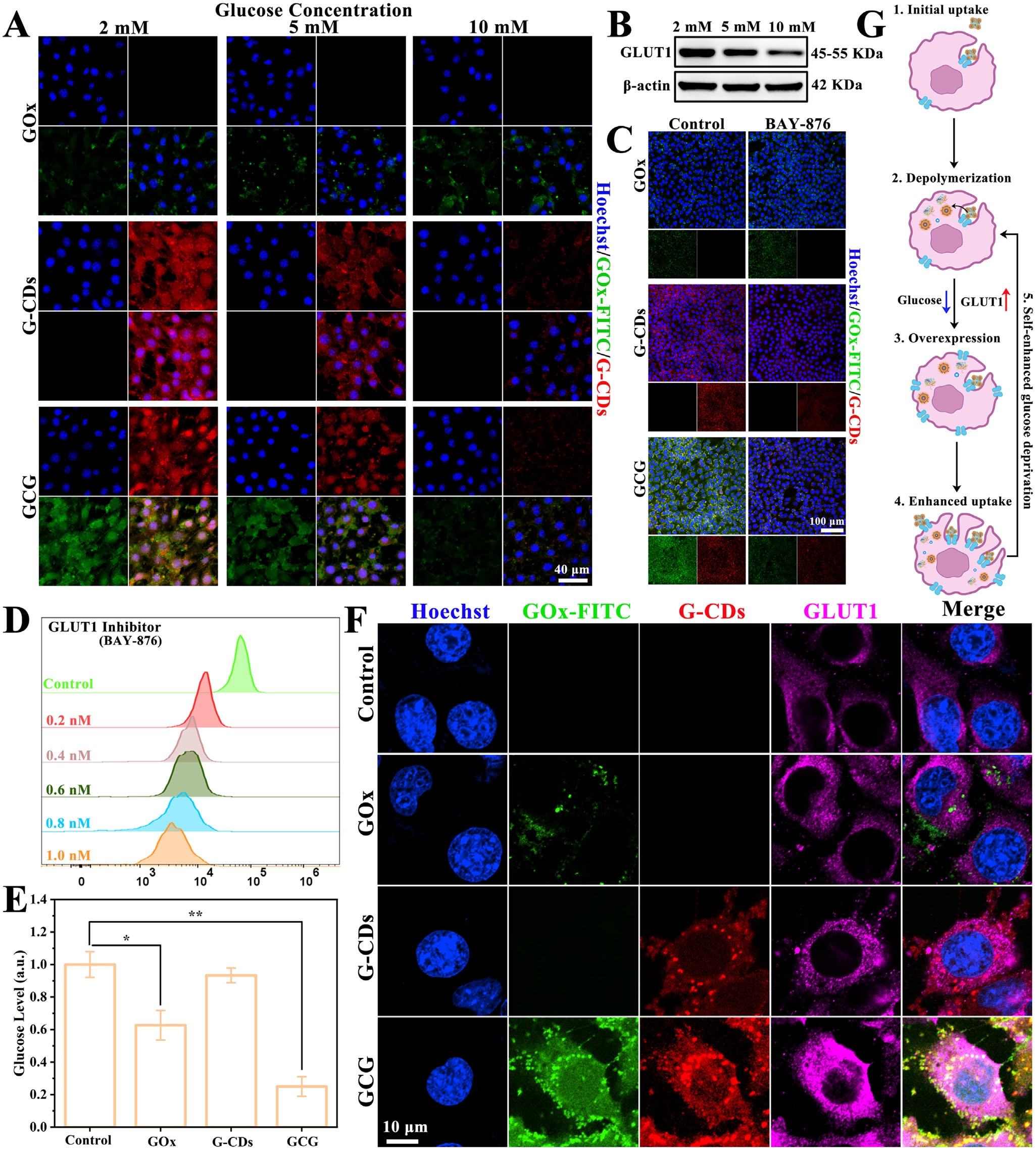
Self-amplified nanoreactors are used for tumor metabolic depletion therapy. Such nanoreactors are assembled via copper ion coordination between glucose analogue carbon dots (G-CDs) and glucose oxidase (GOx). After hijacking highly expressed GLUT1 of tumor cells for cellular internalization, the nanoreactors disassemble and activate GOx in the tumor-specific high-GSH environment to rapidly consume glucose. This glucose deprivation further upregulates GLUT1 expression to recruit more nanoreactors, forming a positive feedback loop for sustained glucose consumption.
Self-amplified nanoreactors are applied to induce tumor disulfide death. The system creates severe glucose scarcity through a positive feedback loop, leading to NADPH depletion. This further triggers abnormal aggregation of disulfide bonds in cytoskeletal proteins such as actin and FLNA, ultimately resulting in cytoskeleton collapse and tumor cell death.
Self-amplified nanoreactors are adopted for tumor anti-angiogenic therapy. The severely glucose-deficient environment can directly inhibit endothelial cell sprouting and migration, effectively suppress compensatory angiogenesis, cut off nutrient supply to deep tumor regions, and synergistically boost anti-tumor efficacy together with metabolic depletion.
Self-amplified nanoreactors are used for tumor metabolic depletion therapy. Such nanoreactors are assembled via copper ion coordination between glucose analogue carbon dots (G-CDs) and glucose oxidase (GOx). After hijacking highly expressed GLUT1 of tumor cells for cellular internalization, the nanoreactors disassemble and activate GOx in the tumor-specific high-GSH environment to rapidly consume glucose. This glucose deprivation further upregulates GLUT1 expression to recruit more nanoreactors, forming a positive feedback loop for sustained glucose consumption.
Self-amplified nanoreactors are applied to induce tumor disulfide death. The system creates severe glucose scarcity through a positive feedback loop, leading to NADPH depletion. This further triggers abnormal aggregation of disulfide bonds in cytoskeletal proteins such as actin and FLNA, ultimately resulting in cytoskeleton collapse and tumor cell death.
Self-amplified nanoreactors are adopted for tumor anti-angiogenic therapy. The severely glucose-deficient environment can directly inhibit endothelial cell sprouting and migration, effectively suppress compensatory angiogenesis, cut off nutrient supply to deep tumor regions, and synergistically boost anti-tumor efficacy together with metabolic depletion.
18915694570
Previous: BK Oncolytic virus pla
Next: Chiral Nanoneedles and


