

Chiral Nanoneedles and Broad-Spectrum Antiviral Protection
Chiral nanoneedles are used to block viral fusion processes. These chiral nanoneedles consist of ZnO nanostructures stabilized by L-/D-FPF tripeptides, which can target and bind to the HR2 domain of Class I viral fusion proteins. When the nanoneedles come into contact with the viral surface, they bind to the stalk region of HR2 through chiral-matched multivalent interactions, competitively inhibiting the binding between HR1 and HR2 and blocking the assembly of the six-helix bundle (6-HB), thereby achieving fusion blockade under dark conditions.
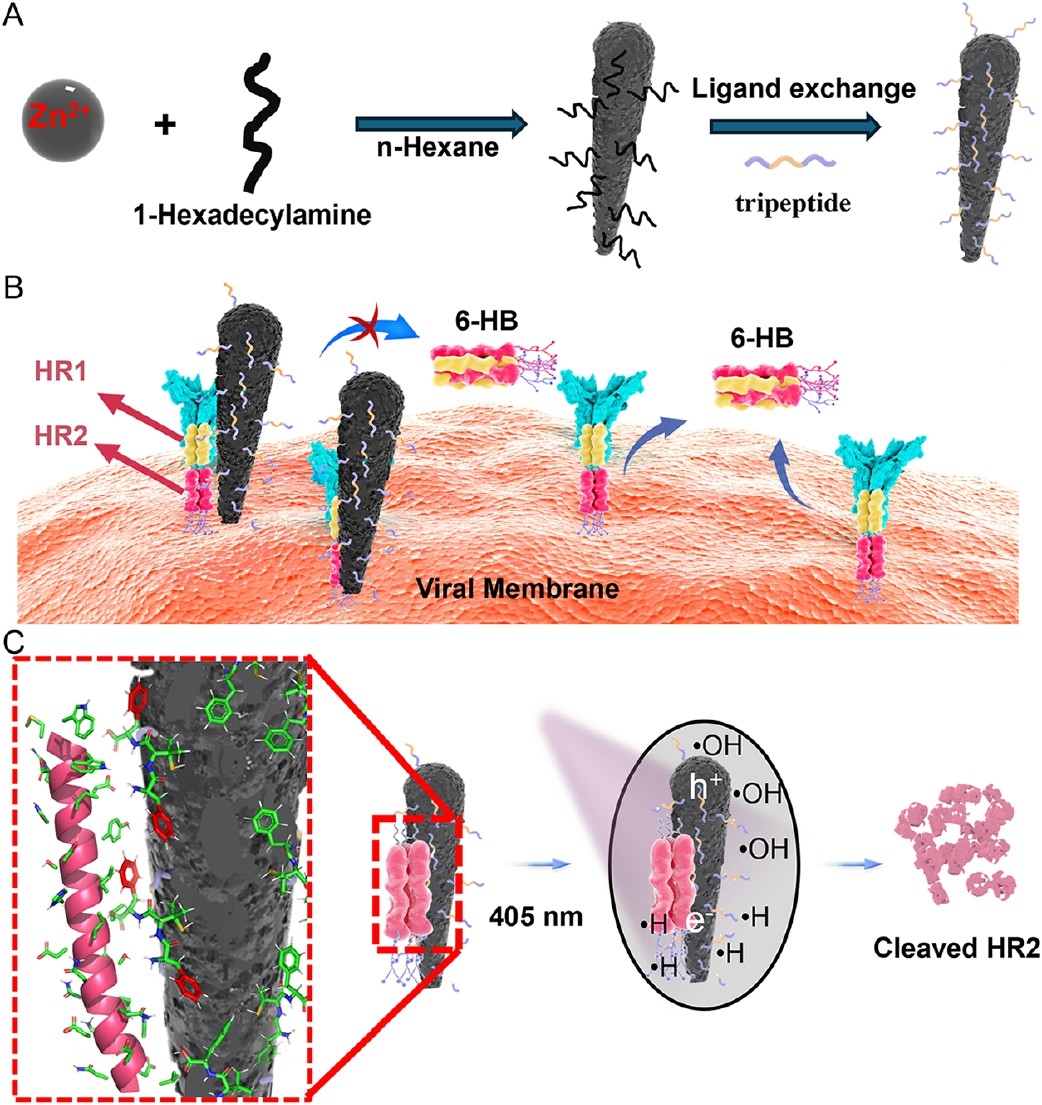
Chiral nanoneedles are employed to achieve site-selective photocatalytic cleavage. Chiral ligand modification not only narrows the band gap of ZnO but also suppresses charge recombination and extends carrier lifetime via the chiral-induced spin selectivity (CISS) effect. Under 405 nm light irradiation, the nanoneedles generate localized reactive oxygen species that can specifically hydrolyze amide bonds between acidic residues and hydrophobic residues within HR2. Since reactive species only act at nanometer distances, high-affinity binding immobilizes viruses on the photocatalytic surface, converting non-specific oxidation into spatially confined targeted catalysis to realize irreversible inactivation.
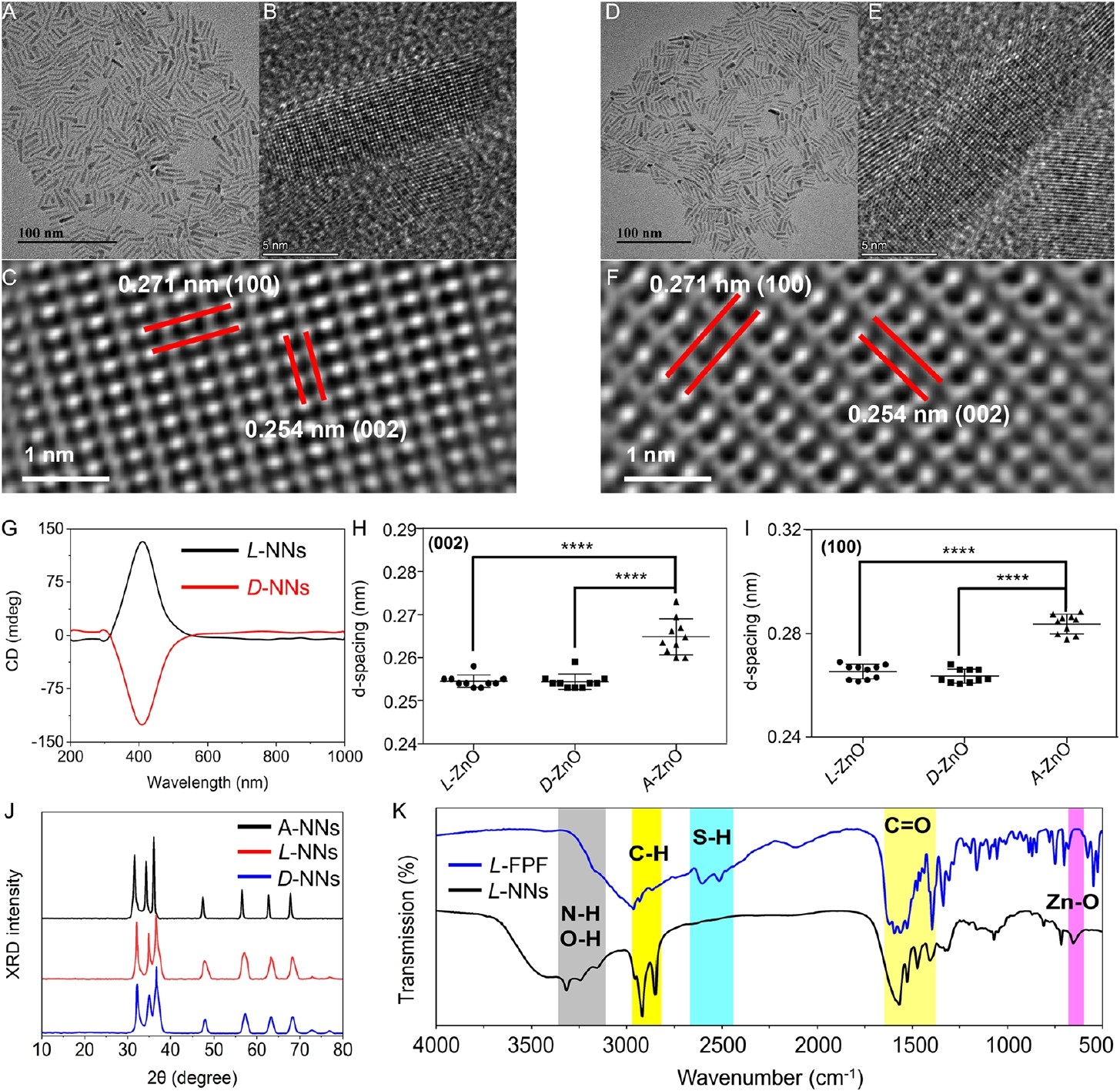
Chiral nanoneedles enable broad-spectrum antiviral effects and biosafety protection. Targeting the conserved HR2 domain of Class I fusion proteins, chiral nanoneedles exhibit broad-spectrum activity across viral families. When applied in protective coatings, they can disrupt viral envelopes and surface proteins under low light doses. Comprehensive biocompatibility evaluations have verified their favorable cellular and tissue safety, offering a new strategy for developing light-responsive protective coatings.
Provide various material design services covering the full workflow, including highly innovative scheme design, preparation, characterization, in vitro and in vivo validation (cell/animal experiments). Our postdoctoral team with multiple high-impact Q1 journal publications can meet your diverse challenging and complex requirements. Our research areas include hydrogels, drug delivery, nanomaterials, polymers, liposomes, microneedle drug delivery and more. We support project design, National Natural Science Foundation application, and publication of high-impact Q1/Q2 papers such as AFM, SCI and AM. Feel free to contact us👇️
17768014569 (Senior Engineer)
17761925168 (Engineer Zhang)
18013729810 (Engineer Yang)
18915694570
Previous: BK Oncolytic virus pla
Next: the end...


